Graph Rot: Why Your Knowledge Graph Is Lying to Your AI
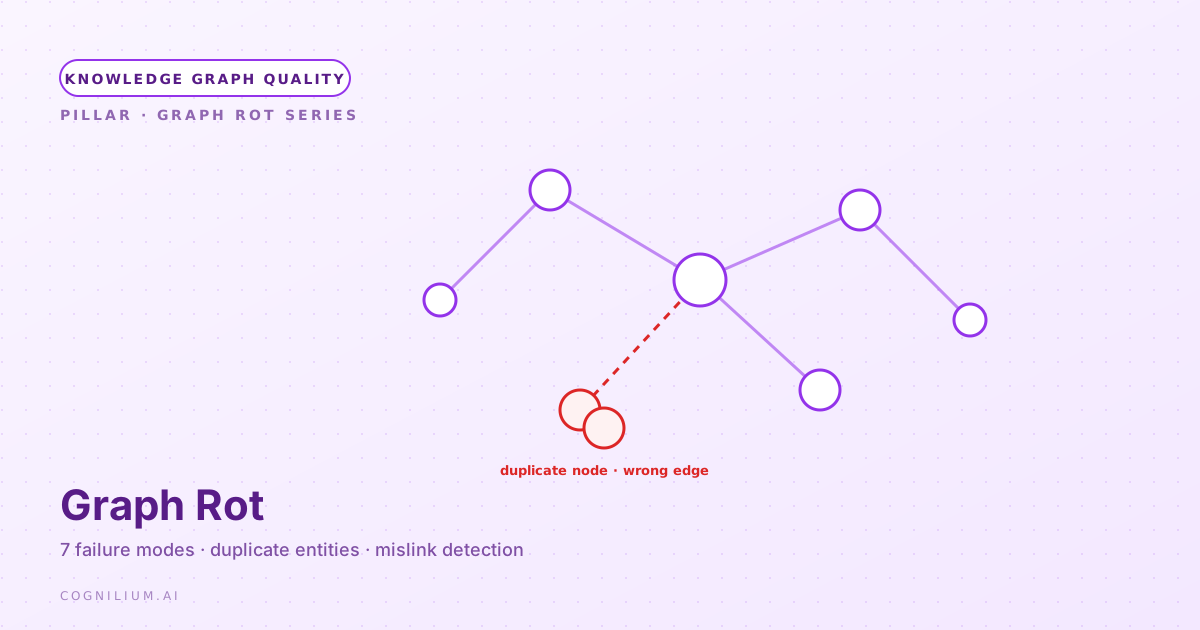
Graph rot is the silent decay of a knowledge graph's correctness. The 7 ways production graphs go bad, from an engineering team that builds them.
Why production knowledge graphs decay and how to keep them correct: entity resolution, mislink detection, grounding checks, scoring, and scheduled audits. The engineering discipline behind knowledge graphs AI agents can trust.
Graph rot is the silent decay of a knowledge graph's correctness. The 7 ways production graphs go bad, from an engineering team that builds them.
Ordered by chapter. Each post stands alone but builds on the one before it.
Extraction gives you names. Entity resolution decides identity. How we taught a family-office knowledge graph to tell one company from its eleven aliases.
A mislink is an edge between two real nodes that no document supports. How we detect wrong relationships in a production knowledge graph.
Most teams ship a knowledge graph when it looks done. We ship it when it passes a score. How we grade a graph before any agent is allowed to query it.
Most teams rebuild a knowledge graph or append to it blindly. Both rot it. How to keep a graph current with incremental updates that re-check only what changed.
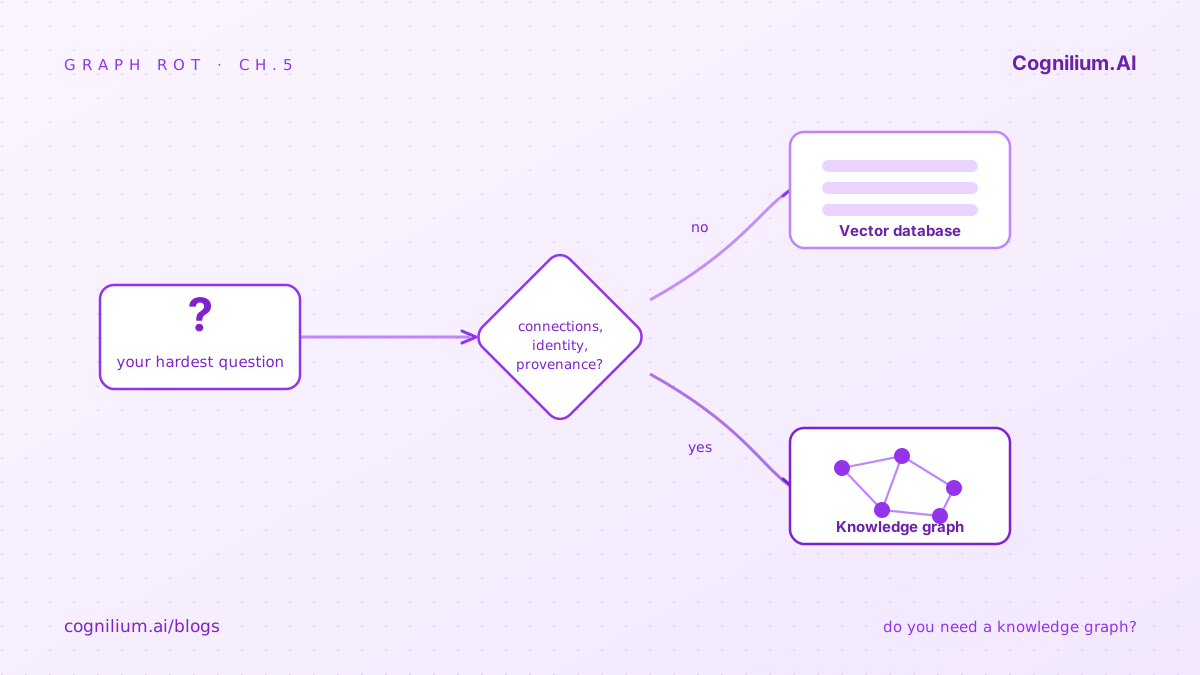
Most teams build a knowledge graph they do not need, or skip the one they do. From a team that has shipped both: when a vector database is enough, when you need a graph, and whether to build or buy.
We built a 23-agent contract-review system and deliberately gave it no knowledge graph. From a team that ships both: how to tell an orchestration graph from a knowledge graph, and when each one actually earns its place.
The whole Graph Rot series in one runnable checklist: seven questions to ask your own knowledge graph, in about twenty minutes, to find the rot before your agents do.